
Curve Hero Review: Pricing, Features, Pros and Cons
A review of Curve Hero, the true-cloud dental PMS: browser-native workflow, all-in subscription pricing, where it wins over server-based systems, and where the ceilings are.
TL;DR
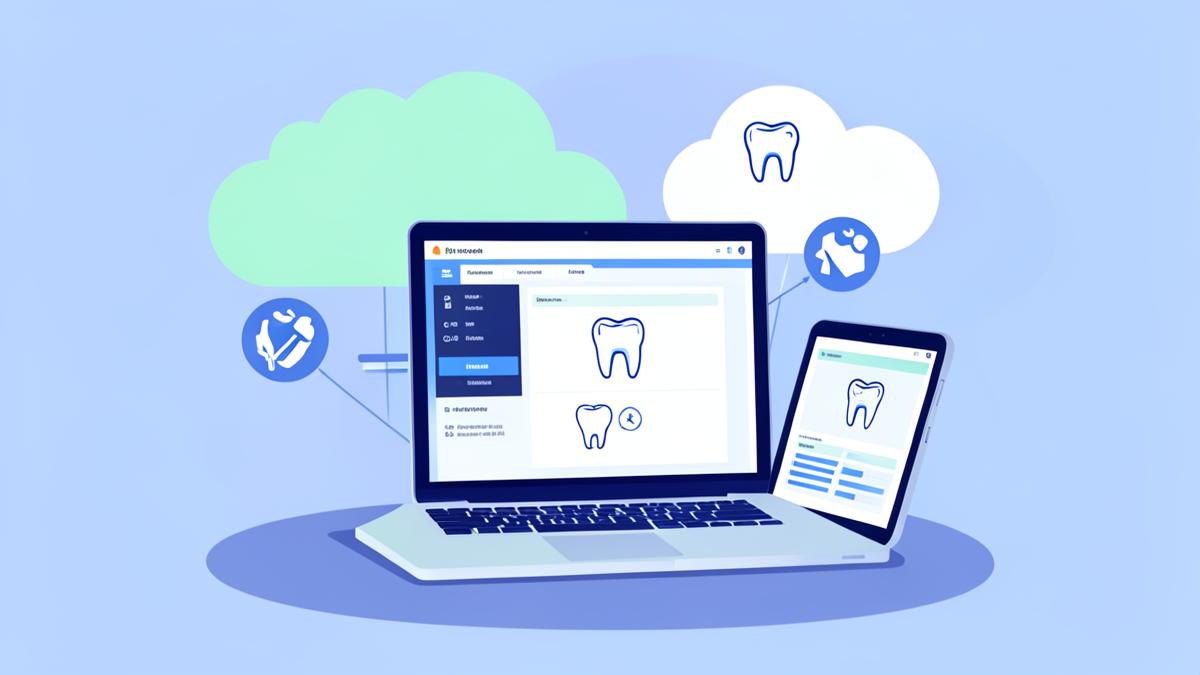
Curve Hero is a genuine cloud practice management system, no server, no workstation installs, works in a browser from anywhere. Practices that switch usually cite two things: IT headaches disappearing, and the owner finally being able to check the schedule and production from home. The ceilings are integration depth and cost as you scale providers.
Our score: 8.4 / 10 for single-location and small multi-location practices that want zero infrastructure.
Who Curve Hero Is For
- Startups and de novo practices that do not want to buy a server on day one.
- Owners tired of IT, updates, backups, and disaster recovery become the vendor's problem.
- Small groups needing consistent access across two or three sites without VPN engineering.
Core Features
Browser-Native Everything
Scheduling, charting, imaging, ledger, and reporting all run in the browser, including on a tablet. Automatic backups and updates are included rather than scheduled events you have to survive.
Scheduling
Clean, modern appointment book with provider and operatory views, recall management, and straightforward blockouts. It is easier to teach a new hire than any server-based competitor.
Clinical and Imaging
Charting and perio are competent, and imaging is built in rather than bolted on, a real advantage over systems that require a separate imaging application on each machine. Verify your specific sensor models are supported before you commit.
Billing and Reporting
Ledger, insurance estimation, claims, and a dashboard-style reporting layer that is more visually usable out of the box than most legacy systems.
Where Curve Hero Falls Short
- Cost scales with providers. Cloud subscriptions typically price per provider or per user, so a busy multi-doctor office can pay several times what an equivalent Open Dental practice pays.
- Internet dependency. No connection, no practice. Business-class internet plus a cellular failover is not optional.
- Narrower third-party ecosystem. Fewer certified integrations than Dentrix or Open Dental, and less freedom to query your own data directly.
- Customization limits. You get the workflow the vendor ships. Power users coming from Open Dental notice.
Pricing
Curve sells a subscription that bundles hosting, backups, support, and updates, generally priced by provider or user count with an implementation and data conversion fee up front. Because infrastructure and support are included, the comparison against a server-based system must include your server, backup, and IT costs to be fair, but at higher provider counts the cloud subscription usually still ends up more expensive. Confirm current pricing and conversion fees directly with the vendor.
Integrations and API
Integration is available through partner programs and middleware, and the common modern use cases, online booking, reminders, reviews, and AI phone handling, are achievable. What varies is write depth. As always, the question to ask a vendor is not "do you integrate with Curve" but "do you write appointments and payments back into Curve, and how quickly do they appear?"
Switching To or From Curve Hero
Conversions into Curve from Dentrix, Eaglesoft, and Open Dental are standard and handled by the vendor's implementation team. Leaving is more work than leaving an on-premise system because you do not hold the database; clarify export format and cost in your agreement.
How Aron Fits With Curve Hero
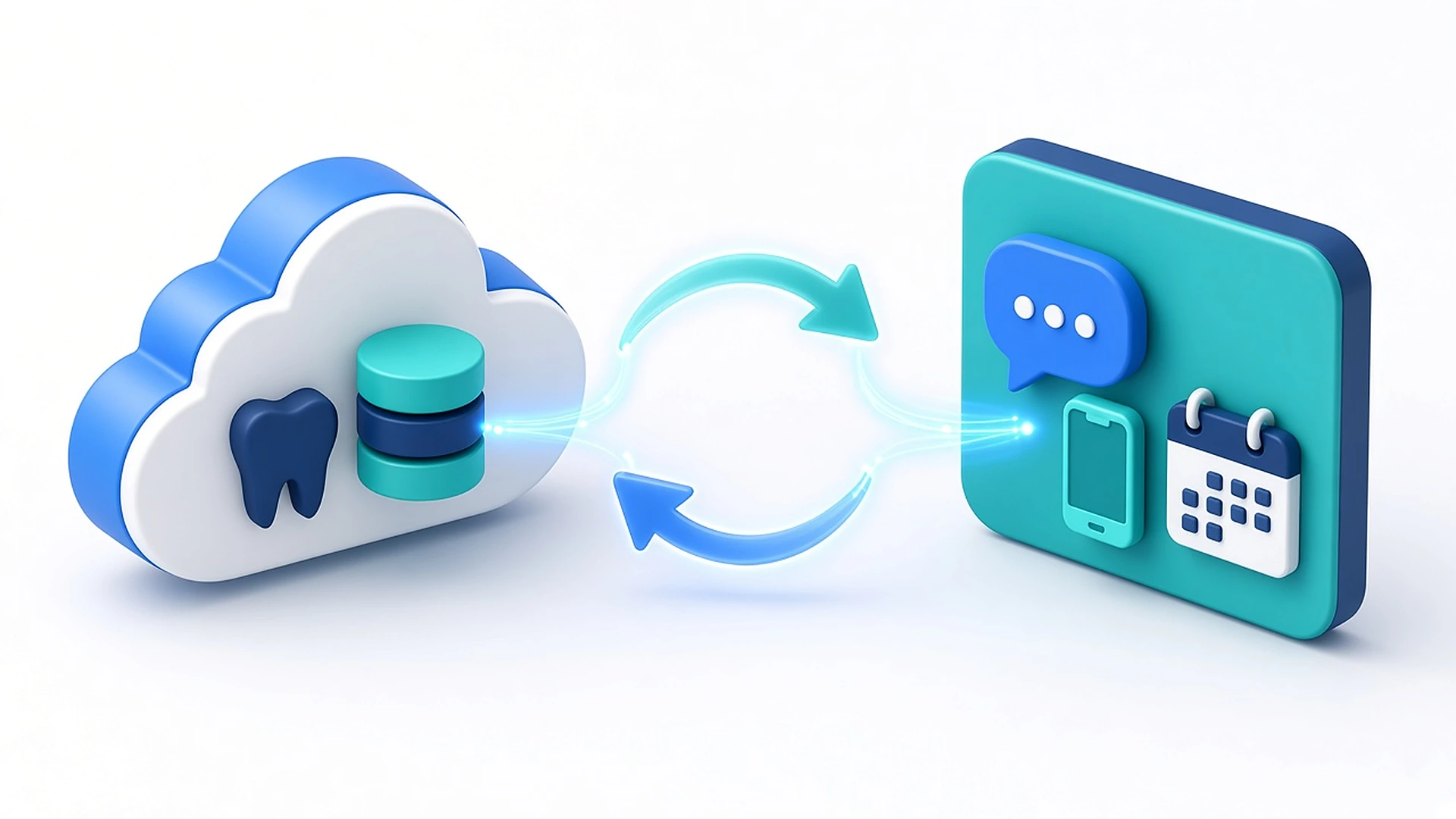
Curve removes your infrastructure burden but does not answer your phones, work your recall list, or chase your accounts receivable. Aron sits in front of the practice: AI receptionist for overflow and after-hours calls, two-way patient texting, automated reminders and confirmations, review generation, insurance verification, and text-to-pay collections, all reconciled against the PMS so the front desk works from one screen.
Where write-back is available, bookings and payments land in the PMS. Where it is limited, they are staged for one-click confirmation.
Implementation and Onboarding
Curve implementations are faster than server-based conversions because there is no hardware project. A single location commonly goes live in three to six weeks: data conversion, configuration workshops, training sessions delivered remotely, then go-live with support coverage for the first days.
What still takes time is configuration discipline. Provider schedules, appointment types and durations, recall intervals, fee schedules per carrier, and permission roles all need decisions from the owner, not the vendor. Practices that treat these as an afterthought inherit a schedule that fights them for years. Set aside a full planning day with your scheduling coordinator and hygienist before configuration is locked.
Because Curve runs in the browser, your dependency shifts from a server to your internet connection. Before go-live, install a business-class primary connection and a cellular failover. An office that loses connectivity loses the chart, the schedule, and the ledger simultaneously.
Total Cost of Ownership
Curve is a subscription typically scaled by provider or user, with implementation and conversion fees up front. A three-year model should include the subscription with expected provider growth, implementation and data conversion, imaging integration or the vendor imaging product, payment processing, patient communication modules, and internet redundancy. What you no longer pay for is a server, its refresh cycle, server-side backup infrastructure, and much of the IT management line, that offset is real and should be counted honestly on the other side of the comparison.
The break-even calculation matters most for growing practices. Per-provider pricing means adding associates increases the software bill in a way flat-fee systems do not. Model the cost at the practice size you expect in year three, not the one you have today.
Data, API and Integration Depth
Curve is a closed, hosted platform, and integration happens through the vendor's partner program and API rather than direct database access. Realistically:
- Read access to availability, patients, and appointments is generally workable for approved partners.
- Write-back depth varies by object. This is the single most important question to ask before buying any AI booking, payments, or communication layer. Get it answered specifically for appointments, patients, payments, and clinical notes.
- Data export for analytics or an eventual migration should be confirmed in writing at contract time. Cloud convenience and data portability are not the same thing.
Reporting and the KPIs That Matter
Built-in reporting covers production, collections, aging, recall, and treatment plan status with a cleaner presentation than legacy systems. It is good enough for weekly management. For trend analysis, provider scorecards, and marketing attribution, most practices export or connect an external analytics layer. The metrics worth watching are the same everywhere: net collection percentage, hygiene reappointment rate, treatment acceptance, unscheduled treatment dollars by age, and receivable over ninety days.
Security, Compliance and Backups
Hosting shifts most infrastructure responsibility to the vendor, data center security, patching, backup, and redundancy. Your remaining obligations are still meaningful: individual user accounts, role-based permissions, offboarding staff promptly, multi-factor authentication where available, and a signed business associate agreement. Ask about backup retention, restore time objective, and uptime history, and read the contract for what happens to your data if you leave.
Curve Hero vs the Alternatives
- vs Open Dental, Curve wins on zero IT and remote access; Open Dental wins on cost at scale, data ownership, and integration freedom.
- vs Dentrix or Eaglesoft, Curve wins on modern interface and no server; the legacy systems win on hiring pool and hardware ecosystem breadth.
- vs Denticon or Dentrix Ascend, For multi-location groups needing centralized administration and roll-up reporting, those platforms are built for it; Curve is strongest for single sites and small groups.
Who Should Buy It
Curve Hero is a strong fit for a startup practice, an owner replacing an aging server, or a doctor who wants to review the schedule and charts from anywhere without a remote desktop workaround. It is a weaker fit for a fast-growing multi-doctor group watching per-provider costs, or for a practice whose strategy depends on deep third-party write-back automation.
FAQ
Is Curve Hero true cloud?
Yes. It runs in the browser with no local server, which distinguishes it from hosted versions of server-based software.
How much does Curve Hero cost?
It is a subscription, typically scaled by providers or users, with implementation and conversion fees. Pricing is quoted rather than published.
Curve Hero vs Open Dental?
Curve wins on zero IT, modern interface, and remote access. Open Dental wins on cost at scale, data ownership, and integration freedom.
What Teams Actually Report Day to Day
Curve gets consistently good marks on interface and access. Doctors like reviewing the schedule and charts from home without a remote desktop session; front desk teams onboard faster than on legacy systems; and there is no server to reboot. The complaints cluster around cost as the practice adds providers, occasional dependence on internet quality, and integration limits when the practice wants a specific third-party tool that is not in the partner program.
One operational note worth planning for: because everything is browser-based, workstation performance and browser hygiene matter. Underpowered front desk machines and thirty open tabs will be blamed on the software.
Questions to Ask Before You Sign
- Is pricing per provider, per user, or per location, and what happens when I add an associate?
- What are the implementation and conversion fees, and what data is included?
- Which imaging systems are supported, and is there an additional cost?
- Which third-party tools are approved partners, and do they write back appointments and payments?
- What is the uptime history, backup retention, and restore objective?
- If I leave, what data export do I receive and in what format?
Where Aron Fits With Curve Hero
Curve handles the practice; it does not answer the phone at 7pm, work the recall list, or chase the receivable. Aron runs in front of it: an AI receptionist for overflow and after-hours calls, two-way patient texting, automated reminders and confirmations, unscheduled treatment and recall outreach, review generation, insurance verification, and text-to-pay collections reconciled against the ledger. Where write-back is available, bookings and payments land in the PMS; where it is limited, they are staged for one-click confirmation so the front desk never works from two calendars.
Verdict
Curve Hero is one of the best all-in cloud experiences in dentistry and an excellent choice for a startup or an owner who wants out of the IT business. Just model the per-provider cost over three years before signing, and confirm write-back depth for any automation you plan to add.
Three-Year Outlook
The direction of travel in dental software is clear: cloud delivery, open APIs, and automation layers that handle the work the front desk cannot get to. Evaluate any PMS decision against that horizon rather than today's feature checklist. Ask where the vendor's roadmap is going, how open the integration surface is becoming, and what your data export rights look like if the answer disappoints you in two years.
Practically, that means three commitments regardless of which system you choose. First, insist on write-back, any tool that books, collects, or documents must put the result back into the PMS, not hold it in a parallel system. Second, protect data portability in the contract, including format and timeliness of export. Third, separate the system of record from the system of engagement: the PMS should hold the chart and the ledger, while a modern layer handles calls, messaging, recall, reviews, and collections. Practices that make that separation stop being held hostage by a single vendor's roadmap, and they capture revenue that would otherwise sit in an unworked report.
How Aron layers on top
Aron connects to your practice management system and adds the patient-facing automation most PMS platforms leave out. Practices pairing this PMS with Aron most often start with:
See the full dental practice management software overview, or book a walkthrough to see the write-back flow against your own schedule.